
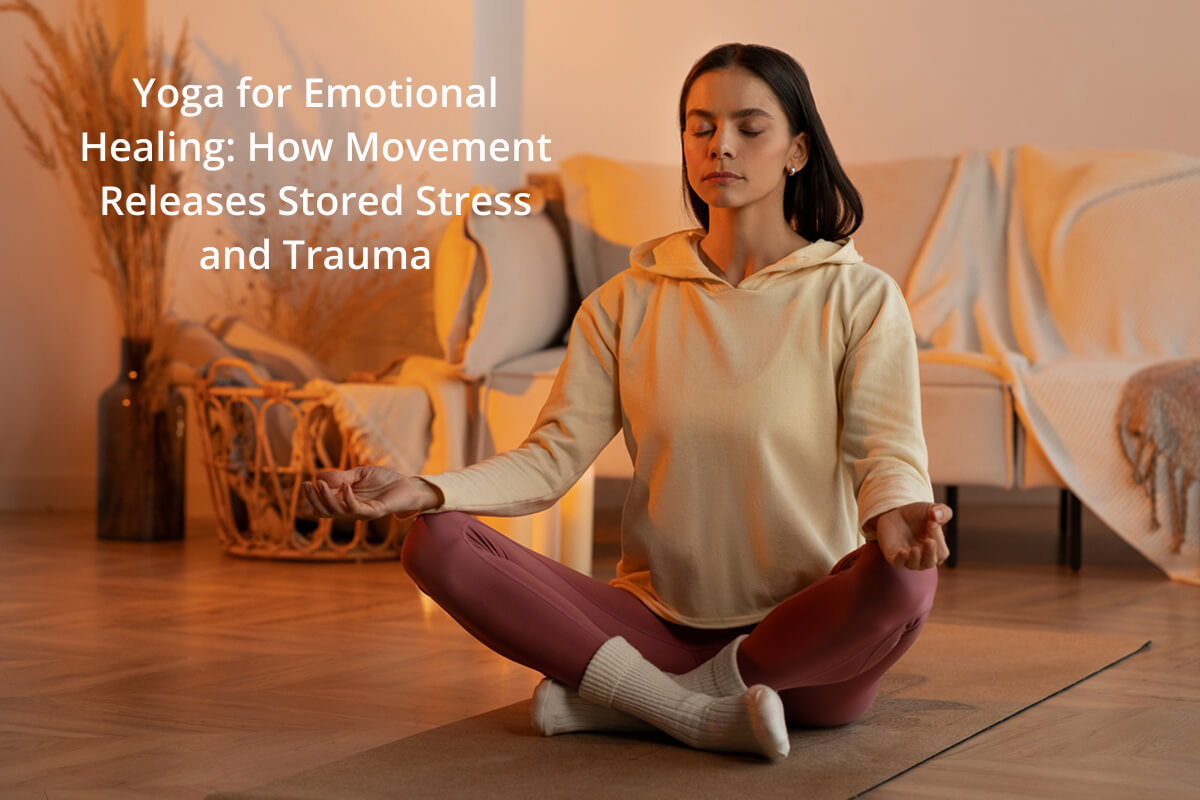
Yoga for Emotional Healing: How Movement Releases Stored Stress and Trauma
Table of Contents
What Is Emotional Healing Through Yoga?
Life moves, real quick…and feelings get kinda pushed aside until they start showing up in the mind and body. Emotional healing through yoga gives a slower, softer route to pause, reconnect with yourself and let go of stress in a wise, mindful kind of way
It’s different from fitness only workouts ,because yoga makes room for emotional noticing, calm breathing, and a steadier inner rhythm.
Definition of Emotional Healing
Emotional healing isn’t about pretending everything is okay, or telling yourself you have to “move on” fast. It’s more like slowly figuring out what you actually feel, letting those feelings exist without pushing them away , and then learning how to hold them in a gentler way. With time , this whole process can make you feel lighter, calmer, and somehow more in touch with yourself again.
Role of Yoga in Mind-Body Integration
Yoga helps bring the mind and body back into a kind of agreement, especially when things are stressful or emotionally heavy. Through motion, breath, and even the quiet bits in between, it gets easier to notice how emotions show up in your body , not just in your thoughts. That kind of awareness can build a firmer sense of balance and an internal feeling of connection , over time.
Difference Between Physical and Emotional Healing
Physical healing most of the time means your body is mending from strain, pain, or an injury , while emotional healing leans more toward sorting through stress, feelings, and what’s going on in your inner world. They’re also very connected, because emotional pressure can land in the body as well. Yoga supports both, really , since it helps the body loosen up while the mind quiets down right at the same time.
Importance of Awareness and Presence
One of the most powerful yoga lessons is learning to slow down, and stay right there in the moment. Instead of constantly distracting yourself or rushing past feelings, yoga invites a quiet noticing of thoughts , emotions, and physical sensations. That kind of presence can feel really grounding, especially during times that feel emotionally too much.
How Yoga Supports Inner Balance
Yoga makes room for movement and for quiet moments, and that can make emotions feel a little less overwhelming. When you practice regularly, you may notice an easier way to respond to stress , so you can feel more grounded and emotionally even in everyday life. Step by step , it builds a softer, steadier relationship between the mind, and the body.
Can the Body Store Stress and Trauma?
It’s not only the mind that takes on stress, the body kinda does too. Sometimes unresolved feelings and long term pressure don’t just “stay in your head”, they can show up in the way you move, feel, and even function day to day. So stress is often described as both mental and physical at the same time, almost like they’re tangled.
Understanding the Mind-Body Connection
The mind and the body are tied together in a real,ongoing kind of way, they keep nudging each other. What you think and how you feel can shift how your body reacts, and physical tension can also steer your emotional side. That’s why emotional stress often shows up “physical” too , it can feel like it has actual heft, even if nothing is technically damaged.
How Stress Manifests Physically
Stress doesn’t only stay in your thoughts , it can appear as headaches, fatigue, or digestive disturbances. A lot of people notice changes in sleep, appetite, or their everyday energy, sometimes with small mood turns that you can’t quite lock down. In a sense the body begins sending little signals, like it’s trying to say something subtle but isn’t right.
Muscle Tension and Emotional Storage
When emotions are not really worked through, the body may store them as muscle tension. A lot of folks feel it in the neck, shoulders, and upper back, where tightness can build up slowly, then just keeps lingering. Over time it can start to feel like the body is carrying emotional load, even if you don’t feel overwhelmed in the moment.
Role of the Nervous System
Your nervous system is a major piece of the whole thing. When it stays in high-alert mode for too long, the body has a harder time fully settling. Then you might get stuck in cycles of tension and watchfulness , where it feels like you never quite return to calm.
Scientific and Psychological Perspectives
In both psychology and neuroscience, studies suggest chronic stress impacts brain and body together. Stress hormones, including cortisol, can influence mood, energy, and long term physical health. That’s one reason managing stress isn’t just a “nice idea”, it matters for overall well-being.
The Science Behind Yoga and Emotional Release
Modern research is showing more and more that yoga is more than just stretching or relaxation, it has a real impact on how the brain and body process emotions. If you do it regularly, it helps create some space for emotional release in a steady, natural kind of way, not in a forced or dramatic manner.
Impact on Nervous System Regulation
Yoga helps restore balance in the nervous system, by moving it away from a stressed “fight or flight” mode into a calmer “rest and digest” state. Then the body starts to feel safer and more centered. Over time, this steadier balance tends to support emotional steadiness, in a way that feels quieter but also more solid.
Role of Breath and Vagus Nerve
Breathing practices inside yoga can nudge the vagus nerve pretty directly , and this is deeply tied to restfulness. When you slow things down, keep it steady and controlled, it’s like sending the body a subtle signal to ease stress and calm down. It sounds almost too basic , but it really can lower emotional intensity in a way you can notice.
Reduction of Stress Hormones
If someone does yoga regularly, a lot of research points toward reduced stress hormones, such as cortisol. When cortisol goes down, the body usually feels less overwhelmed, and more even , not so scattered. From there it can be simpler to support a steadier mood, better sleep, and overall emotional wellbeing as well.
Neuroplasticity and Emotional Processing
Yoga appears to aid neuroplasticity as well, meaning the brain’s capacity to adjust and form new corridors. In that way, emotional patterns can start getting rewired in terms of how they’re held, and later reprocessed. Gradually, many people notice their reactions are less impulsive, more measured, even when something still sets them off.
Research and Evidence
Research across psychology and neuroscience suggests that yoga may help with emotional regulation, and also reduce anxiety. Clinical findings, more broadly, back up its usefulness for stress management , and many outcomes line up with what practitioners report day to day
How Yoga Helps Release Stored Emotions
Emotions don’t always just vanish when we ignore them—sometimes they settle quietly in the body, kinda tucked away in a place you don’t really look at. Over time, it can start to feel like heaviness, ongoing tension, or this mild emotional numbness and there’s no obvious reason behind it.
Movement and Body Awareness
In yoga, movement is usually slow, deliberate ,and softly guided by attention so you can really notice what’s happening inside you. As your awareness grows, you might start sensing places that keep holding tightness ,or even tiny uneasy sensations. That sort of noticing is often the first quiet step toward letting go , not the last one in the line.
Breath as a Release Mechanism
Breath has a big effect on emotional tension. When your breathing shifts to feel deeper and steadier, the body often lets go a bit, and starts relaxing, like it’s loosening the grip the strain it’s been carrying. That can create a sort of naturally occurring pathway for emotional release, not by pulling, not by forcing , and not by stacking on extra pressure.
Creating Space in the Body
Some yoga poses gently open up the tight places where emotions are often held. When physical space increases, the body can feel less bound up and more receptive. And that feeling of openness can also bring a lighter emotional tone.
Mindfulness and Emotional Observation
In yoga, mindfulness helps you view emotions without immediately reacting. Instead of shoving feelings away, or trying to “repair” them right then and there, you just practice noticing. This quieter , observant mental stance can reduce the emotional overload that often tends to build up, and stay there for a while
Gradual Emotional Release
Emotional unloading via yoga is typically slow and understated rather than abrupt. Over time, repeated practice lets the body kind of unknot stored stress, layer after layer, in a quiet way. This step by step rhythm backs up long lasting emotional steadiness and overall stability.
Benefits of Yoga for Emotional Healing
Yoga supports emotional healing in a way that almost feels like it lines up your mind and body, like , better said, it helps create some sort of balance. With steady motion , breathing, and mindful attention, it can ease that emotional pressure that quietly builds from daily stress and the usual life experiences.
Reduces Stress and Anxiety
Yoga helps settle the nervous system, and that tends to lower stress and anxiety on its own. The gentle movements , plus breath practices, guide the body into a relaxed state. Then, day by day, you may get a stronger feeling of emotional ease.
Improves Emotional Regulation
If you do yoga regularly it can feel like you’re better at handling emotions with balance, rather than jumping into sudden reactions. Instead of replying on impulse, you begin to notice yourself earlier and you can actually ask, what am I feeling here. Little by little it adds up, and you get a steadier inner footing.
Enhances Self-Awareness
Yoga basically asks you to pay attention to your thoughts and your body sensations, not rushed, more like careful observation. That extra focus can help you recognize emotional patterns more clearly, maybe even better than before. Then you may find yourself feeling more in tune with yourself and not so distant.
Supports Mental Clarity
When your mind seems all crowded and overloaded, it gets harder to think straight, and keep everything coherent. Yoga tends to loosen the mental clutter, and it also supports attention through mindful breaths and intentional movement. In many cases, you wrap up a session feeling lighter inside , like your head got dusted out, and refreshed.
Promotes Inner Calm
One of the most familiar, clear benefits of yoga is the calm it creates for you. The practice helps relaxation arrive not only in your body, but also in your feelings. With time, that quieter state can become easier to bring into regular days, not just while you’re in class.
Best Types of Yoga for Emotional Healing
Not every kind of yoga is going to handle emotional healing in the same way, kinda depends a lot actually. Some styles are slow-ish , very calming, while others are more about letting tension loosen up bit by bit, through movement and breathing
Restorative Yoga
Restorative yoga leans on poses that are fully supported and held for longer stretches. The intention is to help the body and mind ease down without pressure, or any feeling of “you have to”. This gentle angle can help relieve emotional burnout and stress
Yin Yoga
Yin yoga is built around long-held positions that work deeply into connective tissue. The quiet stillness of the practice encourages emotional insight, and even a kind of patience. A lot of people notice it helps release pent-up strain, and that heaviness people carry emotionally
Gentle Flow Yoga
Gentle flow yoga kind of blends easy motion with careful breathing, in a calm steady rhythm. It can help blood circulation move better, ease stress, and also back emotional steadiness. In general it feels more nurturing than really physically demanding, even if you still do move your body around
Trauma-Informed Yoga
Trauma-informed yoga is kind of about making a safe, non-judgmental kind of space for emotional settling, not just stretching. It keeps choice, comfort, and body awareness in the front. even more than strict performance rules that can feel rigid or too much. This method can support someone returning to their body slowly, gently, and at their own tempo, without pressure, or sudden surprises
Somatic-Based Practices
Somatic-based yoga practices focus on noticing physical sensations that link up with emotions and stress. The sequences are usually slow, a bit intuitive too, and they stay super grounded in the body. They build awareness about how feelings show up physically, and how those sensations can be released over time
Effective Yoga Practices for Stress and Trauma Release
When the body has been under stress for a long time, it often ends up wanting safety softness, and rest way more than like intense movement. Gentle yoga practices can help, slowly untangle built up tension without the body feeling completely swamped or, you know , shoved.
Slow, Mindful Movement
Moving slow, helps the body downshift instead of staying stuck in a rushed, tense state. Gentle transitions , paired with steady breathing, tend to calm the mind and reduce physical stress. With this slower tempo it’s also easier to notice how feelings actually show up in the body
Hip-Opening and Grounding Poses
The hips are often linked with stored tension, and even emotional tightness. Soft hip opening poses can help the body feel more open, more grounded, and relaxed over time. Grounding postures also build a firmer sense of stability and safety
Gentle Backbends
Gentle backbends help open the chest and support breathing, especially when stress makes the body curl inwards. These poses can create a kind of emotional openness , and a slow release over time. The key is to move carefully, comfortably, not forcing the stretch, not even a little.
Restorative Postures
Restorative yoga postures are made so the body can fully rest, recover, and just… sink. Props for support make it easier for the muscles to soften without effort, or any strain. This deeper relaxation can calm emotional overwhelm and mental fatigue too
Body Awareness Techniques
Body awareness practices kinda invite you to notice the sensations, without immediately judging them or pushing to change them, on the spot. With this soft sort of attention you can strengthen the connection between mind and body. After a little while, it also tends to make emotional patterns way easier to spot and then work through, too.
Role of Breathwork in Emotional Healing
Breathing is something we do every moment , and yet most of the time we don’t really notice it, not how much it nudges our feelings. Like, stress can simmer in the background, then suddenly the breath turns shallow, a little too quick, or it gets uneven and well… you don’t catch it fast enough. Breathwork helps you bring that awareness back into the body in a kind of gentle, almost low-key way.
Calming the Nervous System
With deep, steady breathing the body starts sending signals to the nervous system, basically saying “hey, we’re safe” and that relaxation is possible. This can lower panic sensations, ease tension , and make emotional overwhelm feel less in control. Honestly even just a few minutes of calm breathing can shift how the body feels.
Deep Breathing Techniques
There are simple practices, like slow belly breathing or counted breaths. They help quiet the mind, not by force , but by guiding the rhythm. The body tends to slow down naturally instead of staying stuck in a stressed pattern. Over time this supports emotional durability , the kind that helps you recover faster after a hard moment.
Breath Awareness and Control
When you pay attention to the breath, you start noticing what’s happening emotionally right now. Learning to steer the breathing gently, keeping it steady , can also build stability and grounding. Then it gets easier to respond with more clarity instead of reacting right away, like a reflex.
Linking Breath with Movement
In yoga, breath and movement go together, like they share the same tempo. Moving with the breath supports a flowing and calmer experience. As you move, physical tension tends to release, while your mind stays anchored in the present moment. This connection often feels soothing , mentally and emotionally too, kind of like a steady hand on your shoulders.
Emotional Regulation Through Breath
Breathwork may help with intense feelings in a way that eases the body’s stress response, kind of indirectly. In the middle of anxiety or when emotions feel heavy, deliberate breathing gives a little stop, a small pause, that is calming and also feels like a quiet safeguard. After you keep doing it, it can become a usable option for emotional balance, in the day to day, not just for emergencies.
Creating a Safe and Supportive Practice
Emotional healing through yoga works best when the body feels safe, comfortable and mostly free from pressure. In a calm and supportive space you can relax more deeply, and also stay connected to your own pace during practice without constantly adjusting every breath.
Practicing in a Comfortable Environment
A calm, cozy corner can really shift how relaxed your body feels while doing yoga. Soft light, less distraction ,and an overall soothing mood make it easier to settle into a deeper calm. And honestly, emotionally feeling safe around yourself matters almost as much as plain physical comfort.
Listening to Your Body
Everyone processes stress and feelings a bit differently,so listening to your body is crucial. Some days you may want more motion while other days you’ll benefit from stillness. Noticing these signals helps you build trust in yourself little by little, over time.
Avoiding Force or Pressure
Healing routines shouldn’t feel pushy, or too heavy to carry. If you press too far ,whether physically or emotionally, it can stir up more tension instead of letting it melt away. Move with gentleness, allow a pause when it’s needed, and the whole experience tends to be healthier in the long run.
Using Props for Support
Props like cushions, blankets, or even yoga blocks can help the body feel more held up and at ease in different positions. They reduce extra strain and make postures feel more reachable, also more comfortable. With that kind of backup, the mind often loosens up too.
Respecting Personal Boundaries
It’s important to remember that emotional healing looks different for everyone. Honoring your own limits and the level of comfort helps create a sturdier sense of safety during practice , even if it feels awkward at first. Giving yourself permission to move slowly is part of the healing process itself, because you’re allowed to take the long way around.
Signs of Emotional Release During Yoga
Sometimes yoga brings out feelings you didn’t even know you were holding on to. A simple stretch, a deep breath , or even a quick pause of stillness can then make you feel something emotional in ways you didn’t expect.
Unexpected Emotions (Tears, Relief)
Some people might suddenly get emotional during certain poses, or while doing breathing exercises. Tears can come, relief too, or there’s this quick moment of unexpected calm that shows up with no clear reason. It can be as simple as your body letting go of emotional tension that was built up for a while.
Physical Sensations (Warmth, Tension Release)
An emotional release i s not always this big, clearly emotional thing. Like sometimes the body kinda talks first, and you only catch up later. You might notice warmth in specific spots, long sighs , light trembling, or muscles slowly unloading that stubborn tightness. It can feel like you’re finally breathing out, after you’ve been clenching for way too long.
Increased Awareness
Yoga makes these quiet little pockets where you start noticing what’s going on from the inside, and not just, like, the obvious stuff. Thoughts feelings or physical sensations that usually get pushed aside may suddenly feel more noticeable. Even if it’s a bit awkward at times it can still help you build a more rooted connection with yourself, you know, in a day to day way.
Emotional Shifts Over Time
Healing through yoga tends to shift in a slow manner, like tiny changes that stack up over days, then weeks. You may notice you meet stress with a different approach, staying steadier when things get rough, or you can catch your feelings more clearly while they’re happening. These subtle recalibrations are often hints that a deeper kind of repair is moving along quietly, underneath all of it.
Trauma-Informed Yoga: What You Need to Know
Trauma-informed yoga is a gentler, more steady kind of practice that wants to help people feel safe, comfortable, and in control. It usually leans away from “perfect pose” energy , and it’s more about rebuilding a kind of trust between mind and body, again, but slowly , not in a rush.
Principles of Trauma-Informed Practice
Trauma-informed yoga is kinda built on choice , awareness, and emotional safety, it’s not just a vibe. People are invited to move at their own pace, and then do a quick check in on what feels right in their body. The main idea is support, not performance, like it’s never a pass, or a test, and nobody is keeping score.
Importance of Safety and Consent
Honestly, feeling secure during practice is one of the biggest pieces of trauma-informed yoga, and it matters. Instructors usually avoid pushing, or using forceful adjustments, and they respect your personal limits every single time without any exceptions. The whole point is to build real trust, and that quieter sort of ease you can actually notice as you move along, is not just a nice idea.
Avoiding Triggers
Some movement types, certain words or even the room setup can sometimes stir up hard feelings or old memories. Trauma-informed yoga tries to lower these triggers by keeping the experience calm, and pretty predictable. The aim is to help people feel steady in themselves, not swept away or flooded.
Role of Qualified Guidance
A trained trauma-informed yoga teacher understands how to guide with care and with sensitivity too, but it can feel a bit different from class to class. They create a supportive environment where you feel noticed , and respected in the same moment. And when the direction is done in the right way, the whole practice often seems safer as well, like you can actually ease in even if you’re still sorting out your rhythm and the way you breathe through it, one moment at a time.
When to Modify Practices
Not every posture or breathing practice seems comfortable for every person , and that’s totally fine . Sometimes you need to tweak the movement, or take a small break when it feels right, no big deal. The point is that the session should adjust to you , not the other way around .
Common Mistakes to Avoid
Emotional healing with yoga tends to be a slow-ish and very personal path, not really some switch that flips on overnight. Lots of people hope for instant results, but the real change usually shows up through patience, steady reps, and a calmer, gentler awareness… you know, noticing what is already present even if it’s subtle. Also worth remembering, yoga for emotional healing is not about pushing yourself harder, or trying to “win” at tougher poses
Expecting Immediate Emotional Release
Some people think they will get a major emotional breakthrough after one session, but healing almost never moves like that. Emotional release may show up slowly and quietly, over time. Little changes in mood, a growing sense of clarity, or even a bit more calmness… those are just as meaningful as anything dramatic.
Pushing Beyond Comfort
If you try to brute force deep stretches, or you deliberately poke at heavy emotions, your body may end up feeling locked up, not really soothed. Yoga is meant to act like a calm foundation, not like it drags you under, or flips into pain out of nowhere. Checking in with your own boundaries matters a ton, and it’s also tied into how the recovery actually gets moving, step by step.
Ignoring Emotional Responses
During practice it can be easy to shrug off emotions that show up, especially if they feel unexpected or weird. But giving those emotions a gentle look can help you understand yourself in a clearer way. If you ignore them completely, emotional tension may stay locked in the body.
Lack of Consistency
Doing yoga now and then can be relaxing, sure, but emotional repair usually needs consistent attention. You can still keep it simple with short sessions, as long as you return to them, over time. The improvement may be slow, almost understated, and it still matters the same, even when your mind is telling you it should work faster, right away.
Practicing Without Awareness
If you move through poses too quick ly or treat yoga like it’s just a workout, you might end up missing a lot of the emotional value. That healing, the real kind, often shows up when you stay with your breath, body, and even your quiet feelings while you’re practicing. Awareness is what, really helps you form a more meaningful link inside of you. Without it, everything can feel kinda mechanical.
How to Build a Consistent Emotional Healing Practice
Healing emotionally with yoga isn’t really about doing everything absolutely perfectly each and every day. It is more about just showing up for yourself in small ,kind of everyday ways even when life is kind of busy , stressful, or emotionally heavy in that hard to name feeling.
Starting with Short Sessions
Begin small if you want the whole thing to feel less daunting, and easier to stick with. Even a short stretchy yoga flow or a breathing session can help you feel more steady ,more grounded. Honestly, what matters most is staying consistent, not how long you go.
Creating a Routine
Having a small routine can bring a bit of stability and comfort to your mind and body. Practicing at the same time each day , even if it’s only a few minutes , helps form a soothing custom. Over time it starts to feel like a safe little corner just for you.
Combining Yoga and Breathwork
Yoga and breathwork kind of go hand in hand for emotional healing. The movement helps unhook physical tightness, while slow breathing can calm emotional strain from the inside. Put together, they make the whole experience feel slower , softer , and more peaceful.
Tracking Emotional Progress
Emotional healing often unfolds in a subtle way, and it’s usually gradual ,so the shifts might not look huge at first. That said, keep an eye on small clues— like feeling more grounded, sleeping better, or not snapping so quickly when stress shows up— it helps you realize how far you’ve already gone. Even tiny upgrades still matter, a lot.
Staying Patient and Compassionate
Some days the practice might feel comforting, and other days emotions may feel heavier than you expected. That is a normal part of healing , really. Being kind to yourself, and letting everything unfold slowly , can make the whole journey feel a lot more supportive and genuine.
When to Seek Professional Support
Yoga can be a deeply supportive tool for emotional healing , but sometimes extra help is needed along the way. There are moments when emotional pain feels just too heavy, kinda confusing or frankly overwhelming, to manage by yourself. And yeah, reaching out for support can actually make a real difference, in a way that surprises you.
Persistent Emotional Distress
If sadness, anxiety, fear, or emotional exhaustion stick around for a long time , it may help to talk with a mental health professional. Ongoing emotional distress can start impacting daily life , your relationships , and overall well-being. Getting support earlier can keep those feelings from quietly getting weightier over time.
Trauma-Related Symptoms
Some people deal with symptoms connected to past trauma , like panic, flashbacks, numbness, or constant emotional pressure. Those experiences can feel hard to untangle when you try to hold everything alone. Professional guidance can offer safer , more structured support for healing, instead of just “pushing through.”
Overwhelming Emotional Reactions
Yoga and breathwork can sometimes lift strong emotions to the surface in an unexpected way. If those feelings get too intense or just too hard to manage, it’s important to seek additional support, rather than trying to power through solo. Healing should feel grounding , not emotionally unsafe.
Need for Guided Therapy
Therapists , and trauma-informed professionals can help people understand emotional habits and patterns more deeply . They provide tools, direction, and a safer space to work through hard experiences, little by little. Having that kind of professional support can make the whole healing journey feel less lonely , more reachable.
Combining Yoga with Professional Care
Yoga can work kind of quietly alongside therapy or other types of professional care. Even when therapy, focuses on emotional processing through conversation and careful guidance, yoga tends to bring people back to the body and mind in a more physical way. It’s not just, one thing replacing another, it often feels like both together provide a more whole, and balanced healing experience.
FAQs About Yoga and Emotional Healing
A lot of people start to wonder about emotional healing through yoga , after seeing how stress and emotions can really seep into the body. It feels natural to have questions like, how does this even work, and what should I expect , realistically, as time moves on.
Q1. Can yoga release stored emotions?
Yes, yoga can sometimes help let go of emotions that were kept inside the body for a long time. With movement, breathing, and mindful attention, some people notice emotional changes , tears, unexpected relief, or just a lighter feeling. For everyone it looks different, and it usually shows up gradually, not all at once.
Q2. Is yoga effective for stress and trauma?
Yoga can be really useful for stress, and for supporting emotional repair, especially when it’s practiced gently, and with steady effort. It helps settle the nervous system and it also builds better body awareness. When it comes to deeper trauma, yoga often works best alongside professional guidance , or therapy , so you feel held in the right ways.
Q3. Which yoga is best for emotional healing?
Often gentler approaches are the most supportive, like restorative yoga, yin yoga, trauma-informed yoga, or slow-flow sessions. These styles usually emphasize rest, breath, and awareness more than intense physical strain . The “best” option is typically the one that feels safe, and kind to you , even if it’s not flashy.
Q4. How often should I practice for emotional healing?
There isn’t a single perfect schedule, but honestly even a few times a week can make a real difference. Usually short, consistent sessions help more than going hard, then disappearing for a while. What really matters is building a routine that feels workable, and stable, not exhausting.
Q5. Can beginners start yoga for emotional health?
Yes, absolutely. you don’t need flexibility , or prior experience, or any advanced poses right away to use yoga for emotional well being. Starting with simple breathing exercises and soft, slow motions is usually sufficient to start noticing yourself calmer, and more in tune with your inner life.
Key Takeaways
Emotional healing with yoga seems kindof quiet, slow, and really personal, in a way you just can’t rush. It’s not only about repairing everything all at once , more like creating little openings where the body and mind finally get to ease up, breathe, and feel supported again, even if it’s only for a moment.
Over days and weeks, small practices like mindful movement, breathwork, and actual rest can help you feel closer to yourself. The route won’t look the same for anyone, but honestly even a softer pace, and tiny improvements, can still make a real difference for emotional steadiness.
Emotional stress doesn’t just stay inside your head, it often shows up through your body, tight muscles, general burnout, headaches, or that constant background tension. Yoga can help emotional release in a gentle way by guiding your body into downshifting , calming the nervous system, and making it easier to notice feelings alongside physical sensations, kind of together at the same time.
Also, remember this: consistency matters more than intensity. A practice that feels safe and caring, when you do it regularly, usually heals more than pushing yourself too hard just to “get through it.” And sometimes the deeper stuff needs extra guidance, and that’s completely okay. Yoga can blend really well next to therapy or other professional support when you need that extra layer.
Begin Your Emotional Healing Journey Mindfully
Emotional healing does not always arrive through big life changes, or some dramatic moments. Sometimes it starts quietly, like, a deep breath in, a few gentle stretches, or just letting yourself slow down a bit and actually hear what your body has been trying to tell you.