
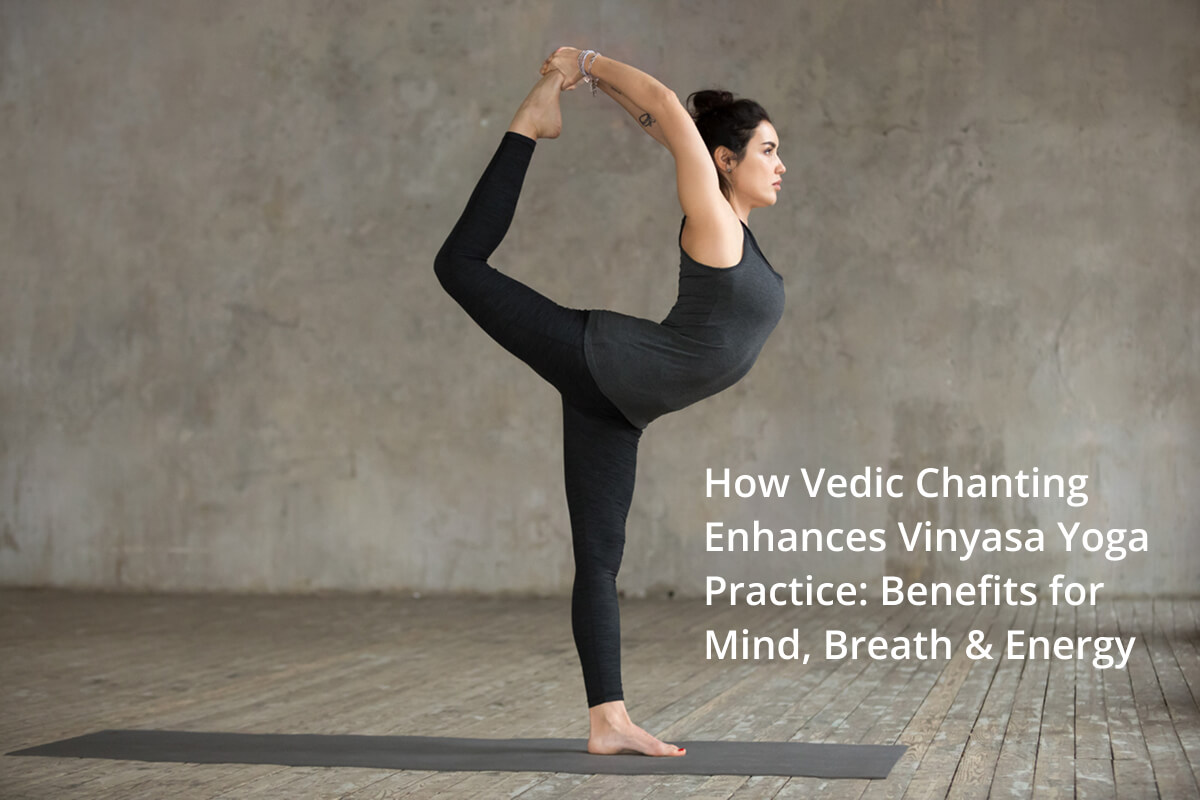
How Vedic Chanting Enhances Vinyasa Yoga Practice: Benefits for Mind, Breath & Energy
Table of Contents
What Is Vedic Chanting?
Vedic chanting isn’t really about singing, it is more like remember ing. it’s an old practice, where sound, breath, and attention sort of move together in a very exact way. for centuries those chants were shared teacher to student only by listening and repeating again and again. Even now, when someone chants a Vedic mantra, it feels less like reading words and more like stepping into a rhythm older than memory itself
Definition of Vedic Chanting
Vedic chanting is the traditional oral recitation of Vedic mantras using careful pronunciation , correct pitch, and a fixed rhythm. Each syllable is spoken with attention, because a tiny shift in sound is thought to change the mantra’s force, and its interpretation too.
Why Sound Holds Importance in Yogic Traditions
In yogic traditions, sound isn’t treated as ordinary noise. The idea of “Nada” sacred sound, suggests that vibration is right at the root of existence, like it’s part of how everything is built. chanting then becomes a way of aligning mind and body with that deeper pattern.
That’s also why some mantras feel soothing, even if you don’t fully understand the translation. the repetition, breath control, and the ongoing vibration can create a quiet steadiness, that is sensed in the body almost as much as in the emotions.
The Meaning of Svadhyaya in Vedic Practice
Svadhyaya is often taken as self study,but in actual Vedic practice it feels more layered. It can mean watching yourself closely through sacred recitation, kind of like seeing your own mind in the reflection of sound. When a mantra gets repeated everyday , it sort of turns attention into a steady habit, even more discipline. Over time inner awareness shows up, not as a loud thought but as a quiet noticing, in a very direct way.
In the Yajur Veda , the Svadhyaya-prakarana talks about regular recitation as a kind of sacred duty. It isn’t only about memorizing verses, no, it’s more like returning toward the self, again and again, through reflection, through the voice, and also through consistency that you keep.
Difference Between Vedic Chanting & Modern Affirmations
Modern affirmations are usually personal declarations made for motivation confidence. Like you sit with a phrase and you try to get a stronger mindset. Vedic chanting is different, it comes from an old lineage where each mantra is kept with the same tonal structure, for generations, not just casually picked up.
Affirmations usually lean on upbeat thinking, but Vedic chanting is tied to discipline, sound accuracy, breath, and tradition. One thing is self made ,the other is received, practiced,and then carried forward, over centuries of oral teaching.
Understanding the Connection Between Sound & Yoga
Sound has always been this quiet, kind of background part of yoga, even before people started talking about vibrations, or nervous system healing. In a lot of traditions chanting was used, not exactly for show, but to settle the mind, steady the breath, and make an inner sense of balance.
And the connection between sound and yoga is less about performance. More about being here, now. A repeated mantra, a slow breath, or sometimes even one syllable can make the body feel calmer, and the mind feel a bit less scattered, like the thoughts are finally not running all over.
How Sound Influences the Mind and Body
Some sounds stick around in the body long after they are heard. A slow chant, or that low humming vibration, can loosen tight breathing , ease mental strain, and make a quiet sort of calm, that kinda spreads through the whole body.
Breath, Rhythm & Movement Synchronization
When chanting keeps a steady beat, the breath starts matching it, almost by itself. After some time, moving feels smoother too, like the body and breath are finally working in tandem, instead of tugging at each other every which way.
The Science Behind Repetitive Vocal Sound
Lately, modern studies are implying that repetitive vocal sounds can sort of nudge the parasympathetic nervous system into action, that whole part of the body tied with rest , calmness, and recovery. If you do slow chanting, it seems to lower mental clutter and it gives people a more even emotional pulse, even when life feels a bit loud in the background.
There’s also this mindfulness thing that rides along with repetition. When the same sound comes back again and again, attention has less room to slip around
Why Ancient Yogic Practices Included Mantra
Ancient yogic traditions included mantra not just as a ritual, but because sound could help build focus and inner discipline. Repeating a sacred syllable gave the mind a fixed place to return to, especially during meditation or those longer stretches of silence where you otherwise might drift. Still, mantra was never only about concentration, or “just thinking the right thing” either. It also makes breath, posture, emotion , and presence more noticeable.
Why Vedic Chanting Complements Vinyasa Yoga
Vinyasa yoga moves like breath already, but once chanting steps into the room, the whole flow starts to feel quieter, like kind of inward. The mind stops leaping ahead to the next pose, or it does it less often. Sound gives the body this steady place to come back to.
Vedic chanting does not push you into stillness, it kind of coaxes it, gradually, almost without noticing. One mantra, repeated while everything keeps moving can make a quick sequence feel anchored and deeply here.
Creating a More Meditative Flow State
During transitions, the mind often wanders into thoughts, plans, or plain distraction. Chanting gives attention a soft anchor so awareness stays inside the movement , instead of drifting somewhere else entirely. The repetition of sound forms a rhythm that feels soothing without much effort. After a while, poses do not feel like separate events.
Improving Breath Awareness During Sequences
Vedic chants naturally follow a measured tempo, and the breath starts adapting to it on its own. Inhales feel fuller, exhales stretch longer, and the whole exhale slows down less rushed. Instead of trying to force deep breathing, the sound gently steers it. The body starts listening more carefully to breath, especially in longer flows or when poses get more demanding.
Enhancing Presence and Body Awareness
When sound, breath, and motion line up together, the body becomes easier to sense from within. Little adjustments in balance, tension, or alignment turn clearer, almost obvious. Chanting also helps attention not to scatter. The mind remains near the body , and the practice feels less mechanical , more alive in each passing moment.
Bringing Intention Into Physical Practice
Without intention, yoga can kind of drift into just movement and training, like it’s only the body doing the work. Chanting helps remind practitioners that yoga was always supposed to hold inner attention as well, not only what happens outside. Even a short mantra before practice can shift the whole atmosphere. The postures stay physical, but they start carrying a quiet meaning, alongside the effort, and somehow it feels more connected
Benefits of Combining Vedic Chanting with Vinyasa Practice
Vedic chanting and Vinyasa sort of meet in this natural way, like they were always meant to be together. One seems to travel through breath , and through the body too. The other goes through sound and vibration, and it lands in the space around you. When you put them side by side, there’s this rhythm that feels less like “exercise” and more like slowly turning back toward yourself , one breath at a time.
In a lot of traditional practices movement was never really separate from sound. A chant kind of anchors the mind while the body keeps flowing. So inside things feel quieter, even if outside everything is doing its usual loud thing.
Reduced Mental Stress & Anxiety
Those repeating Vedic sounds kind of give the mind this soft, easy thing to hold onto, even if it feels a bit strange at first. Thoughts still show up of course, but they’re less “grabby” , they don’t yank your attention in all directions at once. It’s more like everything settles, gently, maybe even a little earlier than you expect.
Better Breath Control
Chanting helps the breath learn to move with patience, not with force. Each syllable kind of invites steadiness, and that gradually changes how you inhale and exhale while you practice. It’s not rushing, it’s more like allowing. Over time the breath gets deeper, more balanced. In Vinyasa, that translates into smoother transitions and less strain creeping into the body, even when things feel a little more active or warm.
Enhanced Concentration During Practice
It’s easier to stay here, when sound and motion are happening together. The mind gets less scattered because it’s listening, breathing, and moving all at once. Like it has a job already. Even a shorter chant before you start can set up a focus that stays with you through the whole session.
Greater Emotional Balance
Some days come with heaviness that words cannot fully carry. Chanting gives those feelings a place to go, without you having to shove them out. Then with flowing movement added in, it can leave you feeling lighter, calmer, and honestly a bit more emotionally steady afterward.
Improved Energy Flow & Calmness
In Vinyasa you’re building warmth, movement in the body , and while the chanting is happening it brings a softer feel to the mind. Together, it kinda helps you land in a balance between that active energy and the still, quieter place After practice, a lot of people notice this quiet calm, not really exhaustion. The body feels awake , but in a good way the mind feels settled and rested
Stronger Sense of Inner Awareness
When you chant, the sound naturally pulls your attention inward. You start noticing the breath, the heartbeat, and even small emotional changes more clearly With regular practice , this awareness doesn’t just stay on the yoga mat. Little moments become more intentional, and the mind feels less hurried through the day
| Practice Element | Physical Benefit | Mental Benefit | Energetic Benefit |
|---|---|---|---|
| Vinyasa Flow | Flexibility & strength | Focus | Movement of prana |
| Vedic Chanting | Breath regulation | Calmness | Vibrational balance |
| Combined Practice | Mind-body harmony | Deep mindfulness | Balanced energy flow |
How Chanting Influences Breath & Nervous System Regulation
Vedic chanting changes the way breath slides through the body. The voice kind of slows down, the chest feels softer, and breathing stops feeling all frantic or lopsided. After a while, the system starts to follow the tempo of the sound, almost on its own, like the body knows the way.
In a lot of traditions, chanting was never just a kind of prayer. It also works as a stabilizer for the mind, to calm the nerves down, and bring the whole body into one quiet pattern through breath, plus vibration in the air.
Chanting Naturally Lengthens Exhalation
When the chant is offered slowly, the exhale tends to become longer and smoother, without you really forcing it. Sounds like “Om” or “Duṃ” stretch the breath, but it feels easy, not pushed, so the body can relax little by little. That longer outward breath basically signals, there’s no nearby risk. Shoulders drop, jaw loosens, and the mind feels less crowded, more spacious.
Breath Stability During Dynamic Yoga
During flowing yoga, chanting helps the breath stay even, instead of getting scattered. The movements can stay more rhythmic because the sound kind of steers the inhale and exhale together. Even when poses get tough, it can feel more anchored, if the breath and voice stay linked. Then practice feels like it comes from the center, not like you’re rushing through everything.
Vagus Nerve Activation Through Vocal Resonance
When you chant, the gentle vibration you make kind of moves through the chest, throat, and that face area too. This mild resonance might nudge the vagus nerve along, and that nerve is closely linked with relaxation, plus emotional steadiness as well. So that’s maybe why people often feel a bit lighter afterward, or more calm, almost quieter. The body seems to respond not just to the meaning, but also to the vibration itself, like sound has its own set of signals.
Why Slow Breathing Improves Mental Calmness
When you breathe fast , it often comes after stress, worry, or some kind of mental overload. Breathing slower sends the reverse signal , like your body is being told that it is safe enough to loosen up and then rest a bit. Chanting kind of nudges that rhythm naturally
How chanting affects breathing during yoga
- Encourages slower breathing – When you chant, your breath tends to slow down naturaly ,and after a few minutes the body can feel calmer
- Improves oxygen flow – Longer chants often help you breathe deeper too. Like the whole system feels lighter, fresher ,and more open
- Creates rhythm in movement – The sound kinda sets a gentle cadence,and your movements start to feel smooth, almost less forced and more connected
- Reduces stress response – Repeating the chants softly can quiet the mind and release some of the tension thats kept inside the body
The Role of Mantra in Building Mental Focus During Yoga
You can set the body into a pose where it feels mostly still, yet the mind keeps doing its own thing. Thoughts kinda wander, like they’re going for that unfinished task , or old little conversations, or tomorrow’s worry before the breath even feels settled, or fully quiet. A mantra sort of gives the mind a soft landing.
Why the Mind Wanders During Practice
The mind isn’t trained for silence. Even when you are trying to be quiet, it keeps hunting for noise, memory, or some distraction, because quiet can feel unfamiliar. Movement feels safer, somehow. During yoga, this gets clearer. A single posture may look calm, but it can reveal the restlessness that daily busyness usually covers up for us.
Using Mantra as an Anchor for Attention
A mantra can act like a handrail, in a kind of dark. When attention slips away, the sound helps you return, without judging yourself. No pressure, no “fix it right now” feeling. Sometimes it’s only one syllable—Om, So Hum, Dum—repeated softly along with the breath until the mind stops yanking you into every direction.
Chanting & Meditation: Similarities and Differences
Chanting and meditation both take you inward, but they do it with different little steps. Meditation often begins from silence, while chanting kinda starts by letting the sound arrive first. In chanting , the voice and the attention move together, like a companion pointing the way. In meditation, the attention has to stand on its own , steady and alert. One approach sends a vibration outward, the other one helps things settle inward.
Developing Deeper Awareness Through Repetition
Repetition might sound basic, but over time it changes the “feel” of attention. The same mantra can end up sounding different each day, almost like it’s being heard with new senses. After enough repetition, it stops feeling like something you recite. The sound becomes more like it’s already waiting inside you, quietly there, even when you pause.
Energy, Vibration & the Yogic Perspective
Yoga has always treated sound as something alive, not just something we hear. A mantra is kinda felt in the chest, in the breath, in the quiet spaces between thoughts , and the body listens before the mind finally understands . It s like the quieter parts get the message first. In the yogic view, every sound carries movement. Some sounds disturb the mind, while others slowly settle it, like small ripples that calm down after rain.
Understanding “Prana” in Yogic Philosophy
Prana is often called life force, but it feels closer to movement itself , the invisible current behind breath, emotion, and awareness. In yoga, a tired mind is not only mental fatigue, it is scattered prana too. Breathing practices, chanting, and stillness are meant to guide this energy gently back into balance , without pushing. The goal is not excitement, but steadiness, and a kind of steady return.
How Vibrational Sound Affects Internal Energy
Certain sounds seem to travel through the body rather than stop at the ears. A long “Om” can settle the chest, soften the jaw, and slow the breath without any drama. Yogic traditions believe vibration reaches places words cannot. When sacred sounds are repeated, they create an inner tempo, and the nervous system slowly begins to follow it , almost like it remembers.
Chakra Awareness & Mantra Traditions
In a lot of mantra traditions , sound kind of gets linked to chakras, those subtle energy centers that relate to emotion, expression , and awareness too. People often say different syllables, they might “wake up” different inner areas or at least nudge them a bit, softly. Chanting is less about “turning on powers” and more about attention. Like , when the mind actually settles fully on the sound, the body often feels more clear, lighter, and more connected, almost like everything lines up at the same time for a moment, not forcing it, just noticing.
Sacred Sound as a Tool for Inner Alignment
Sacred chanting gives the mind something steady, some place to come back to. On hard days , even one mantra repeated again and again can feel like holding a thread in the dark, like a little guide. Yoga sees inner alignment as more like harmony, not perfection. Breath, body , and thought moving together for a few quiet moments, and sometimes sound is the thing that helps them return into one place again.
Traditional Roots: Vedic Chanting in Yogic Philosophy
Vedic chanting grew by listening, repeating, and yes remembering. In yogic tradition, sound was never just spoken, it was treated like a living presence carried through breath and awareness. Kinda like it moves with you, even when you think you are just making noise.
For centuries, the chants traveled from one voice to another without books, or recordings, or anything like that. This slow careful passing along is what kept the whole practice alive and honestly, deeply human too.
Oral Tradition and Guru-Shishya Parampara
Back then, students would sit beside their guru, for years really, learning each chant by just listening again and again. They didn’t rush to memorize it. Instead it kind of stayed there, through rhythm , and repetition , and that patient everyday attention.
Why Pronunciation and Rhythm Matter
In a Vedic chant every sound seems to carry its own movement, and also its own inner mood. Even a tiny shift in tone can make the whole chant feel out of place, like the natural stream got disturbed. And rhythm helps in a steadier way too. It supports the breath, and after some time the mind grows calmer , not because someone forces it, but because the practice kind of does it for you.
The Role of Discipline and Consistency
People traditionally chanted at the same time each day, often in the quiet hours of early morning. That small routine slowly turned into something like an inner alignment. Some days the voice felt bright, other days worn out,but they still kept going
Ancient Text References to Chanting & Study
Old writings like the Rigveda and the Chandogya Upanishad keep saying, over and over, about the power of sound, breath, and spoken understanding. Chanting got treated as a sacred means of learning not exactly a casual habit. These teachings weren’t only for reading, or watching , in some quiet way. They were for sounding aloud, heard very close, and then slowly being lived, in day to day practice, until it feels like it’s part of you
Beginner-Friendly Ways to Add Chanting to Your Practice
Vedic chanting does not demand a perfect voice. It just asks for attention. Even a soft chant, spoken with care, can slowly change the way breath and quiet feel in side the body. You do not need to start with long hymns, or with hard Sanskrit. The tradition has always moved in small steps… one sound, one breath, one repetition, at a time.
Start with Simple Mantras
Begin with short mantras that feel steady on your tongue, like “Om” or “So Hum.” A plain sound repeated daily often lasts longer than something complicated you learned in a hurry. Try not to stress too much about perfect syllables in the beginning. The comfort of repeating, teaches the body first, before the mind gets the whole picture.
Use Chanting During Breathwork or Warm-Up
Before yoga , or pranayama starts, a soft chant can help your breath sink into a more natural rhythm. The body tends to loosen up faster when sound, and breathing kind of move in sync, like together not separate .
Chant Before Savasana or Meditation
A soft chant before silence works like dimming the lights before rest. It prepares the mind to slow down, instead of suddenly forcing stillness. The sound fades, but something stays behind in the body. That quiet after-tone often makes meditation feel deeper, and less restless.
Practice Listening Before Reciting
In the Vedic tradition, listening comes first, before speaking. Spend some time hearing the rhythm and tone carefully, before you try to repeat it yourself. A chant you learn through your ears creates a different kind of remembrance. Slowly, the mouth starts to follow the sound, as if it was always there.
Learn Under Proper Guidance
Vedic chanting is kind of subtle, and tiny changes in tone can shift the way the mantra flows. When you learn from a teacher you can hear what plain books , usually can’t really show. It’s not only about being correct , a good guide also teaches patience—like how to stay with the sound, instead of rushing through it, just because you want to be done.
| Stage | Practice |
|---|---|
| Before Yoga | 2 minutes of deep breathing |
| During Warm-Up | Simple mantra repetition |
| Mid Practice | Breath awareness |
| End Practice | Closing chant + meditation |
Common Mistakes to Avoid When Practicing Chanting with Yoga
Chanting with yoga is really not about sounding perfect or showing something deeply spiritual from day one. Most people start a little awkwardly, soft, and with a mind that wanders…like, that is totally okay and also part of it.
What matters most is staying right here with the breath, the tone, and the inner feeling it brings inside your body. A kind approach usually moves the practice along farther than force or perfect control ever will.
Treating Chanting as Performance
A bunch of folks start chanting because they want to sound impressive, loud, or perfectly trained. But honestly it’s more felt in the chest and the breath than it is heard out there by anyone else. The moment it turns into a “show” , like you are trying to impress someone, the body usually goes tight.
Ignoring Proper Breath Coordination
Chanting and breath are meant to just blend, not sit side by side like two separate tasks or chores. When the breath starts to hurry, the sound tends to lose that calm feel, and the grounding effect slips a bit, like somehow it’s not there. Even one little chant can shift a lot, if you say it slowly with a full exhale.
Rushing Through Pronunciation
In Vedic chanting, every syllable has weight n rhythm. Saying it too fast, like you’re late, can make the chant feel hollow even if the words are still technically correct It also helps to slow down enough so you can actually sense the vibration of each sound. And yeah, even the pause in between words can matter, just as much as the words themselves
Overcomplicating the Practice Early On
A lot of beginners jump into heavy mantras, super strict rules, and long routines all at once. That kind of pressure, it usually brings frustration instead of real connection Starting with one simple chant and a few mindful breaths is often plenty. The routine tends to grow naturally, when the body feels steady, calm and not forced
Who Can Benefit Most from This Practice?
Before some practices are truly understood, they are usually felt first, kind of like not fully knowing yet but sensing anyway. Vedic chanting works in a similar way too. You might not catch every word, and still the rhythm sort of settles down somewhere deep inside the body, like quiet, patient weight. At the start it asks for not too much, just attention, breath, and a real willingness to listen slowly.
Beginners Seeking Mental Calmness
If you’re new to spiritual stuff, Vedic chanting can feel surprisingly grounding, almost steadying you from the inside. The repetition gives the mind less empty space to roam and more space to rest, yes. Even a few minutes of steady sound can soften the clamor of the day. You stop trying to “empty” your mind so hard, and you just breathe along with the chant, naturally.
Busy Professionals Managing Stress
People with constant deadlines often forget what silence feels like. Chanting makes a small pause, and that pause lets the breath slow down again. The organized rhythm helps release mental clutter, bit by bit, gently. It’s not really escape from pressure, rather a kinder way of holding it, with less strain.
Yoga Practitioners Wanting Deeper Awareness
For many yoga practitioners, movement is only one door. Chanting becomes another doorway, where attention shifts from posture to vibration and inner listening, in a simple way. The practice helps breath body, and sound move together. Little by little, yoga starts feeling less outside and more inward, like the room changes shape.
Meditation Learners Exploring Sound Practices
Sitting quietly in meditation can be a bit tough at the start , even if you feel like you are pretty prepared. Vedic chanting gives the mind something sacred to fall back on, instead of fighting every stray thought that just keeps showing up .
FAQs
Vedic chanting is not just about sound, it is really about rhythm , breath, and that kind of presence you can actually feel. Even just a few minutes of chanting can make the mind seem less scattered and your body a bit more grounded, like “oh ok, i’m here” kind of moment.
Is Vedic chanting necessary for yoga practice?
No, yoga is totally possible without chanting. Still, adding chanting can create a deeper sense of focus and it helps the mind settle before movement or meditation begins. Some people come to yoga through the body first, and they only discover the sound later. That route and the other route both work, honestly.
Can beginners practice chanting during Vinyasa yoga?
Yes, beginners can start with something simple, or even one syllable like Om. The point isn’t “perfect”, it’s more like getting comfortable with breath, and sound, together. In Vinyasa, chanting can gently help match movement with attention and breathing, without forcing anything.
Does chanting improve breathing capacity?
Chanting kinda naturally slows the breathing, and it often pushes you toward longer exhalations. Over time, that can make your breathing feel more even and more controlled, like the air is less “messy” inside you. Also, many people find that regular mantra chanting creates a calmer rhythm through the whole body , especially when stress shows up and starts to tug at you.
What is the difference between mantra chanting and meditation?
Mantra chanting uses sound as the landing spot for your attention, while meditation can be totally silent. With chanting the voice (or the repetition) turns into a kind of anchor, so your mind doesn’t wander too far, even though it tries to sneak off sometimes too.
How long should I practice chanting daily?
Honestly even five to ten minutes, daily can feel pretty meaningful when you do it with attention. I mean, you could say consistency is way more important than trying long sessions, like really long, for no reason. Some days the chant feels powerful, other days it feels quiet, almost awkward… and a little imperfect. Yet both those days still count as practice, even if it doesn’t feel perfect in the moment.
Final Thoughts
Vedic chanting survives because people still kinda choose to sit quietly at dawn and send old sounds into a restless world. It feels less about looking good, and more about remember, like, remembering in a steady way. Even when the voice shakes or the rhythm gets slower with age, the chant still holds meaning. The trying itself becomes sacred, almost like guarding a small flame that refuses to go out, through the long night.
Vedic chanting is not trapped inside the past. It keeps happening every time someone repeats a verse learned from another human voice, just like it was heard once, centuries ago. That’s the part that makes it powerful — the sense that sound can outlast stone, paper, and even whatever we call memory.