
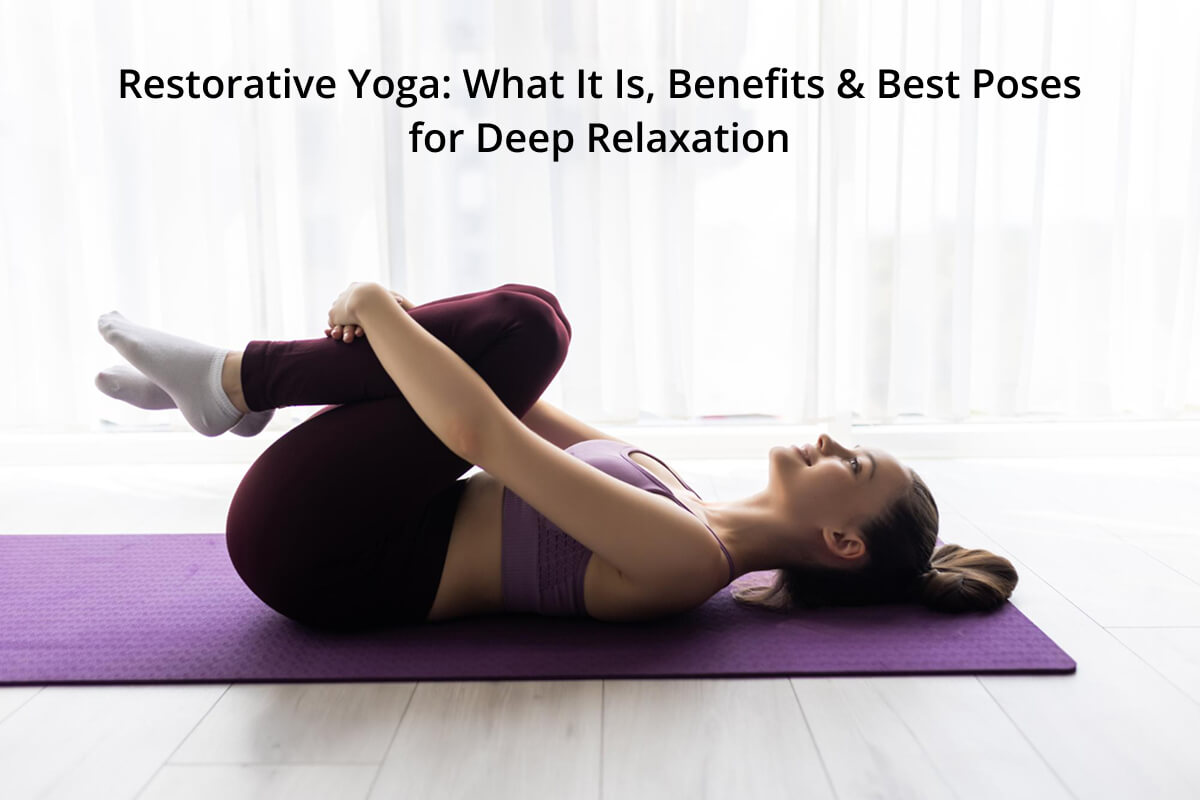
Restorative Yoga: What It Is, Benefits & Best Poses for Deep Relaxation
Table of Contents
What Is Restorative Yoga?
Restorative yoga is the practice that helps you slow down, when life starts feeling too loud or, honestly, exhausting. Instead of intense movement or hard poses, it kind of leans into comfort deep relaxation,and it gives both your mind and body a real chance to rest, for a while.
Definition of Restorative Yoga
Restorative yoga is a gentle type of yoga where poses are kept for longer stretches, while your body stays fully supported. It’s less about “working out” and more about letting yourself pause,breathe, and recover again, properly.
Origin and Philosophy
This practice comes from traditional yoga ideas that emphasize balance, mindful attention, and inner calm. The philosophy is pretty straightforward: when the body sinks into relaxation, the mind often follows, and starts settling too.
Focus on Relaxation and Stillness
Not like those workouts that keep moving fast, restorative yoga invites stillness and slow breathing, it sort of… makes this small quiet pocket where tension can loosen , and where your brain can step away from constant stress, even if just temporarily.
Use of Props (Bolsters, Blocks, Blankets)
Supportive props , like blankets , cushions , bolsters or yoga blocks are used so your body gets held in a more comfy position during each pose. This way the whole session feels like its easier to get through, and honestly it is more approachable for beginners too, or for anyone who feels stiff .
Difference from Regular Yoga Practice
A lot of yoga styles have active movement, balancing ,and strength building poses. Restorative yoga goes softer and slower, like a gentler counterpart to the usual flow. The main aim isn’t pushing at all, it’s resting healing,and helping your body feel secure, calm , and well supported .
How Restorative Yoga Works
Restorative yoga, kind of helps you slip out of that “stress mode” thing , and more into a softer place for rest and recovery. With those slow, almost unhurried movements, plus poses that are supported and held, and then deep breathing altogether , you usually end up with this calming effect that makes it easier for both your body and mind to unwind , a bit deeper than before .
Activating the Parasympathetic Nervous System
Restorative yoga can help switch on the nervous system side that’s tied with resting, easing, and relaxation. When that starts, the heart rate often settles , the mind feels quieter, and the body can begin to notice it’s safer, more comfortable, in a way that feels genuine.
Slowing Down the Body and Mind
Modern life keeps a lot of people moving while thinking nonstop, kind of mentally busy, and physically busy, at the same time. Restorative yoga nudges you to pause for a moment, so the racing thoughts lose speed, and the body can let go of stored fatigue and strain, little by little.
Role of Deep Breathing
Slow , mindful breathing is a big piece of that. Those deeper inhales and longer exhales can help settle the nervous system , support better oxygen flow, and build a kind of calm that seems to move through you, like it spreads without you needing to force it.
Releasing Physical and Mental Tension
Stress often parks itself in spots like the shoulders, neck, jaw, and back , and you may not notice it right away. When you stay in gentle supported postures, the body tends to soften little by little, and the tightness can ease up on its own , without a big tug or struggle.
Supporting Recovery and Healing
Restorative yoga also gives the body time to just rest, instead of pushing through fatigue or stress. This relaxed state may support recovery, make sleep feel easier , and help the whole body feel more evenly balanced as time goes on .
Benefits of Restorative Yoga
Restorative yoga might look kinda easy, almost too easy from the outside, but if you stick with it, the results can feel powerful in this slow, almost stealthy kind of way. Like, as the body starts to understand how to soften, ease off, and really rest deeply, it often supports physical comfort, and emotional well-being too
Reduces Stress and Anxiety
When stress piles up day after day, the body and the mind rarely get a real break. Restorative yoga helps relieve that constant inner pressure with slow breathing , stillness, and a more profound kind of relaxing that doesn’t try to hurry you along.
Improves Sleep Quality
If your mind is awake, even when you try to sleep, it can turn falling asleep into this little challenge. Restorative yoga, with its calming approach, encourages the nervous system to downshift , so sleep can come more easily and tend to feel fuller, and more refreshing.
Enhances Flexibility Gently
Instead of harsh stretch sessions, restorative yoga leans toward flexibility in a softer, more comfortable fashion. By staying in supported shapes for longer, tight muscles often loosen gradually without feeling pushed or dragged.
Supports Emotional Balance
Stress , exhaustion , and that emotional overload don’t always come with a loud warning. Sometimes they quietly nudge your mood and mental well-being, like without asking first. Restorative yoga makes a little room to slow down, not just physically but emotionally too, and for many folks this leads to a calmer , lighter, more grounded kind of feeling in side. It’s not magical, but it can be surprisingly steady.
Promotes Overall Well-being
Restorative yoga isn’t only about the body. With regular practice, it may also help with relaxation, a bit of energy , focus, and that general sense of being more grounded, and settled-at ease even while you’re doing your usual daily movement.
Restorative Yoga vs Other Yoga Styles
Not all yoga styles feel the same, and honestly a lot of beginners only notice that after they actually try a class. Some types of yoga feel more active, and even a bit intense physically, but restorative yoga is different— it’s mainly about easing down, being still, and giving the body time to recover from stress, and that tired kind of fatigue.
Intensity Level Comparison
A lot of yoga styles bring in strength, steadiness, and some nonstop motion that might, kind of feel like an actual workout. Restorative yoga is way gentler, slow poses, with full body support, so instead of pushing yourself physically you can actually ease off and chill.
Goals and Outcomes
More active yoga styles often go after better fitness, endurance, range of motion, or even strength. Restorative yoga is sort of in a different lane, it’s less about “getting it done” and more about soothing the nervous system, lowering stress, and helping both body and mind feel properly rested, like they can downshift.
Pace and Movement
Some practices jump from one pose to the next pretty quickly, with hardly any pause in-between. Restorative yoga slows the whole thing down. You hold poses longer, so the body can settle, and relax all the way, without rushing.
Mental vs Physical Focus
Some traditional styles, or power yoga, kind of put more weight on physical results, endurance, and day to day performance. Restorative yoga tends to be more for mental hush, emotional steadiness, mindful breathwork, and this deeper kind of rest that feels almost like a reset .
Suitable Audience
Restorative yoga suits people who are stressed, worn out, tight, or running on too much emotion. It also tends to be a great match for beginners, older adults, or basically anyone who wants a gentle , soothing session with less intensity and more ease.
| Factor | Restorative Yoga | Active Yoga Styles |
|---|---|---|
| Pace | Slow | Fast/Moderate |
| Focus | Relaxation | Strength/Flexibility |
| Effort | Minimal | Moderate to High |
| Duration | Longer holds | Shorter holds |
| Goal | Recovery | Fitness |
Best Restorative Yoga Poses for Deep Relaxation
Restorative yoga poses kinda help the body feel, you know , supported, safe, and almost completely relaxed. They’re gentle, and instead of pushing effort, they lean more toward ease—like, comfort first. So yeah, they work really well for slowing down after a stressful or really tiring day
Child’s Pose (Supported)
Supported child’s pose softly stretches the back, hips, and shoulders, and at the same time helps your body feel kind of grounded and quiet. If you place a pillow or bolster under the chest, the whole thing can feel even more comforting… and more restful too.
Legs Up the Wall Pose
So, this pretty straightforward pose, it’s kind of like you rest your legs up against a wall while you’re lying on your back , kind of comfortable and easy. It helps take away that heaviness in the legs, supports deeper stillness , and honestly can feel really soothing after standing or sitting for hours and hours.
Reclined Bound Angle Pose
Here the body rests back while the knees open gently out to the sides, in a slow and relaxed way. Using cushions or blankets for extra support helps it turn into this kind of open, calm sensation through the hips and chest area, like a quiet release
Supported Bridge Pose
Supported bridge pose uses a block, or sometimes a cushion under your lower back, to lift and hold the body in a gentle way. It often helps let go of tension along the spine, and it also invites slow, relaxed breathing, not forcing anything, no pushing around.
Corpse Pose (Savasana)
It looks like its just lying there , but it’s actually one of the most crucial kind of resting postures in yoga. You stay there completely motionless, with the entire body soft and kind of settled, and that allows the mind and muscles to get that needed “room” to rest, to re-energize, and to recover . It can feel strangely quiet, like your nervous system is exhaling.
How to Practice Restorative Yoga at Home
Restorative yoga is one of those nicest things that doesn’t really ask for a fancy studio or an overly complicated setup. Like, honestly a calm corner, a few supportive cushions, and a little uninterrupted time… that can be enough to feel like you’re doing a proper relaxing practice at home.
Setting Up a Quiet Space
Try picking a place where you feel comfortable, and not too distracted, even if it’s just some small corner in your room. Soft lighting, some calming music , or even just quiet surroundings can help the body let go and relax a bit easier.
Using Props Effectively
Props such as pillows, folded blankets, cushions, or even yoga blocks they help hold the body steady during the poses. The whole idea is to feel fully at ease , so your muscles don’t keep working harder than they need to, and you’re not stuck carrying extra tension.
Choosing the Right Poses
Start with simpler, softer poses, so the body can settle, not get pushed into strain. Stuff like child’s pose, legs up the wall, or reclined stretches often works great for beginners especially when you feel tired, and you dont really want any extra effort.
Duration and Timing
You don’t need a long session for restorative yoga to actually feel helpful. Even 15–20 minutes, maybe in the evening, or right after a stressful day can help calm the mind and soften the body.
Ending with Relaxation or Meditation
Finish by slowing down with quiet breathing, meditation , or a few minutes of total stillness. That last bit deepens the calm feeling, and it gives your mind a chance to wind down before you jump back into your daily stuff.
When Is the Best Time to Practice Restorative Yoga?
One of the best things about restorative yoga is that it can kind of fit into different parts of your day, depending on what your body is asking for. Some folks use it to unwind after stress, and others do it because it feels like a quieter kind of balance mentally, also more rested in general… or at least that’s how it goes.
Evening Practice for Relaxation
Evenings are one of the most popular moments for restorative yoga , because the body is usually carrying around stress and tiredness from the entire day. Very gentle postures, slow breathing, and that steady kind of pace can help you loosen up and mentally switch off, before you actually go to sleep. Sometimes it feels like everything , just drops a notch.
Morning Practice for Calm Start
A short restorative session in the morning can help you begin the day feeling calmer and less rushed. It gives the mind a softer beginning , instead of jumping straight into stress, distractions, and whatever else is waiting. It’s kind of like turning the volume down early.
Post-Workout Recovery
After those intense workouts, or even a day that’s physically demanding in a bigger way, the body usually feels tight , kinda heavy, and honestly just plain exhausted. Restorative yoga helps muscles loosen up and unravel a bit, it eases tension, and it supports recovery with out piling on more strain or extra pressure.
Before Sleep Routine
If you do restorative yoga before bed it can help calm down racing thoughts, and it makes your body feel like it’s sliding toward deeper rest. A lot of people can tell the most on nights when stress is louder, or when overthinking makes sleep feel kind of… awkward, like you’re stuck half settling, half not. It’s not some magic thing, but it sure gives a nudge in the right direction.
Choosing Based on Lifestyle
There isn’t really one perfect time, not if we’re being honest about restorative yoga. The best timing is the one that feels easiest to come back to , over and over. Morning, night , or even a quick little pause in the middle of the day—regular practice matters more than the clock, for sure. Consistency is sort of the sweet spot, yeah, and it tends to stack up little by little, over time.
How Often Should You Practice Restorative Yoga?
Restorative yoga is kinda less about pushing yourself, and more about giving your body these steady little pauses for rest, and recovery. The nice part is you don’t have to do super long or super intense sessions for it to start feeling helpful—honestly even some small consistency can turn into a noticeable difference with time.
Frequency for Beginners
If you’re just starting, doing restorative yoga two or three times a week is usually a comfortable place to begin, practice wise. Short sessions can help your body and mind sort of calibrate without feeling too much, or like it’s too overwhelming.
Weekly Routine Integration
This kind of yoga basically slips into most schedules, because it’s gentle and also flexible. Some people do it after a busy workday, other folks keep it for weekends, or during stressful stretches, to help you slow down and recharge.
Combining with Active Yoga
A lot of people pair restorative yoga with more active workouts, or even with faster yoga styles too. It gives some kind of counterbalance to the intense movement so your body can recover properly and feel less physically drained, honestly
Consistency Over Intensity
With restorative yoga, doing a small amount, regularly tends to beat doing something long every now and then. For instance, a calm 15 minute practice, done consistently can help you feel more relaxed, more rested and more emotionally steady over time too, even when life feels a little noisy.
Who Should Practice Restorative Yoga?
Restorative yoga is for anyone who feels like their mind or body really needs a chance to slow down , and kind of catch up. Since the practice is gentle , supportive and low effort, it can fit a lot of people across different ages, fitness levels, and daily schedules
People with High Stress Levels
When stress starts to feel constant, the body usually dosnt get much time to truly rest. Restorative yoga helps make a quiet break in the middle of hectic routines, so both the mind and body can feel more steady , and calmer
Beginners in Yoga
You dont need prior experience , flexibility, or difficult poses to start restorative yoga. Because the movements are slow and held in comfort , many beginners find it not as scary, and easier to step into little by little
Individuals Recovering from Injury
People trying to bounce back after physical strain , or an injury often need movement that feels safe and genuinely kind. Restorative yoga leans more on comfort and support ,so it can help the body ease out and relax, without added pressure or extra strain.
People with Sleep Issues
Trouble sleeping is often tied to ongoing stress, mental overload , or tightness in the body. The calming quality of restorative yoga can help quiet the thoughts and get the body ready for deeper rest
Anyone Seeking Relaxation
Sometimes people just want a better method to unwind, and feel a little more centered. Restorative yoga gives a tranquil spot to settle, breathe in slow waves, and step away from everyday demands , even if its only for a bit
Common Mistakes to Avoid
Restorative yoga is suppose to help the body kinda slow down and ease off, yet a lot of people end up using it like a regular workout or at least, in the same “push push” mindset. A few little slip ups can make the whole practice feel less soothing, so it matters to approach it with that soft patience and genuine comfort, not with any pressure or rush, even if you “think” you’re doing it right.
Rushing Through Poses
Restorative yoga really works best when you let your body have a second, or two, to settle all the way into a pose. When you move too fast, from one posture to the next, it becomes harder for the mind and muscles to become really quiet, like they’re actually allowed to unwind.
Not Using Proper Support
Props like pillows, blankets, or bolsters aren’t really “extra stuff” you can skip. They’re more like a quiet agreement with your body, they help you feel held, supported, and safe. Without enough support, the body might keep tension in place, instead of softening into the position naturally.
Expecting Immediate Results
Some people want to feel totally stress-free right after one session, like it’s instant. But restorative yoga tends to be more gentle, and more gradual. The good effects usually show up over time, as you keep practicing, day by day, not all at once.
Practicing in a Distracting Environment
If the room is noisy, or just feels off, then it’s harder to really let go during practice. A calmer, quieter setting, usually makes it easier for the mind to loosen its grip, and actually relax. Sometimes the space feels too restless , and then you can’t sink in as easily.
Ignoring Breathing
Breathing really matters here, like a great deal more than you think. It’s not only about the body, or the shapes you make. Slow, mindful breathing helps calm the nervous system , and it also gives that eased feeling more space, through the whole body, not just one part. And yeah, if you ignore it, you kind of end up losing that steady thread .
Tips to Deepen Your Practice
Restorative yoga gets a bit more real when you stop acting like you need to “perform” it perfectly, and not in some strict, correct way. The better parts usually show up when you go slower, keep a patient attitude with yourself, and let the body along with the mind, fully ease into what’s happening right then.
Focus on Breath Awareness
Noticing your breathing can honestly shift the whole vibe of the practice, slow even breaths tend to help the body sink down into relaxation more, and it also makes it easier for the mind to settle, like quieter than before.
Stay Present and Mindful
It’s normal that your mind drifts a bit during quiet , especially at the beginning. Still, bringing your awareness back to the moment, gently , can help you build a more steady calm, and a clearer mental mind.
Use Guided Relaxation
Sometimes listening to a guided meditation, or soft cueing instructions, makes restorative yoga feel extra soothing. A lot of people relax faster this way, specially on days that are stressful or mentally draining, you know.
Extend Hold Time Gradually
You don’t have to stay in a pose for a very long stretch right away. Slowly adding a little more time as your body starts feeling at ease can help you sink in deeper, while not feeling restless.
Practice Regularly
Restorative yoga often works best when it becomes a regular habit, even if the sessions are short. A few calm practices each week can gradually make the body feel lighter, the mind less noisy, and the whole routine feel more even , and balanced.
Restorative Yoga for Stress, Anxiety, and Sleep
Stress and mental exhaustion have this way of messing with the whole body, not only the mind, and it can show up everywhere, kind of all at once. Restorative yoga helps make a slower, quieter kind of place inside you, where the body can actually give up its grip, breathing starts to feel steadier, and the nervous system gets a real chance to bounce back from constant pressure, you know.
Reducing Cortisol Levels
When stress hangs around for too long it can leave the body kind of locked in a “ready, pay attention” mode, and that might push cortisol upward, the stress hormone. Restorative yoga encourages deep relaxation ,and over time it helps the whole system soften and feel less clenched, not suddenly, but gradually.
Calming the Nervous System
When your nervous system is a little bit over-amped, like everything feels kind of loud inside—then even small tasks can start to feel like too much, too fast. The slow breathing, and paired with those supported postures in restorative yoga, kind of sends a calm message to the body. It’s almost like it whispers “you can pause” , you’re safe, and the tempo can ease down just a bit… not all at once, but enough.
Improving Sleep Patterns
Stress, plus that ongoing mental whirring, can mess with sleep in a couple of ways, first it can make it harder to fall asleep, and later it can take away that refreshed feeling you usually get through the night. If you do restorative yoga regularly, it may help settle the mind before bed , and make it easier to drift into deeper sleep rhythms.
Managing Anxiety Symptoms
Anxiety doesn’t always stay only inside the mind. It can show up in the body too, as sore, tight muscles, quickened thoughts, chest heaviness, or that never-ending inner restlessness. Restorative yoga builds little “still spaces,” so those sensations may feel more manageable ,and not as intense.
Creating a Relaxation Routine
Creating a late-day ritual that actually feels soothing can shift a lot for your overall mental clarity and physical stability. Even a short restorative yoga segment in the evening can become a gentle, familiar routine, and help your body release tension in a more natural manner.
Creating a Relaxing Environment for Practice
The space around you can mess with how deeply you’re able to relax during restorative yoga. Like, if it feels calm and comfortable the body tends to feel safe, and then the mind can slow down more naturally, without that “oh no i’m being distracted” feeling or feeling kinda rushed.
Choosing a Quiet Space
Try to practice somewhere that feels like home, and also where you wont be disrupted. It doesnt need to be some perfect place, or something super huge either. Even a quiet corner in your room can feel kinda surprisingly calm if the whole mood is right
Lighting and Ambience
Soft light usually does better than harsh bright bulbs. Some people want candles, gentle scents, or just a clean, uncluttered area, because it makes the session feel more soothing, more restful. And yes, the vibe matters a ton, more than people normally think.
Use of Music or Silence
Some folks relax better with soft instrumental music, or background sounds that feel steady and kind. Others really want silence, like total quiet. The real answer is simple though: whatever helps your mind go quieter and settle more easily.
Comfortable Clothing and Props
Loose, comfy clothes help the body drop tension more fully during longer holds, and during gentle poses too. Plus, using pillows , blankets , cushions, or other yoga props makes everything feel softer and more supported. Like the body doesnt have to “push through” as much.
Eliminating Distractions
Notifications, loud sounds, and constant interruptions can make it harder to drop into the session. Keep your phone out of reach , and try to create some uninterrupted time even if it’s short. That small shift often helps the mind relax, deeper too.
FAQs About Restorative Yoga
A lot of people start getting interested in restorative yoga when they want something that feels more mild and less edgy than a usual workout. Since this practice leans into true resting and relaxing , beginners usually end up asking, like how it actually works, and who it is mostly suited for.
Q1. What is restorative yoga?
Restorative yoga is a slow, gentle yoga approach that centers on recovery, stillness and real relaxation. It uses supported poses and steady deep breathing so the body and mind can let go, kind of all the way
Q2. How is it different from regular yoga?
Unlike more active yoga styles , restorative yoga keeps things really slow , and you stay in each posture longer with the help of props. So it is less about physical drive, and more about gentle soothing, and stress relief.
Q3. Can beginners practice restorative yoga?
Yes, restorative yoga is beginner friendly, the postures are uncomplicated, and the effort level is low. You don’t really need flexibility, or any previous yoga background to begin.
Q4. How long should a session be?
A restorative yoga session can be 15–20 minutes, but it can also run a bit longer if you want that extra time. Really, even a shorter session, when you practice it regularly , can still help the mind settle, and the body feel more unknotted.
Q5. Is restorative yoga good for stress?
Yes , restorative yoga is often used for managing stress and mental fatigue too . The slow breathing, paired with the calming supported positions, can help the nervous system shift gears, and it often creates that quieter , more settled feeling, like being anchored.
H2 – Key Takeaways
Restorative yoga is kinda less about pushing the body, and more about giving yourself the permission to slow down, then recover. It is a gentle sort of approach , that can help with mental quiet too and physical ease, so you can start to feel more level day to day.
In restorative yoga the whole point is deeper relaxation, rest and helping your body mend from stress , and that tired feeling that piles up. The practice also supports your physical and mental wellness by calming the nervous system, while easing the tightness that builds up over time.
It works for beginners as much as for people who have done yoga for a while, because the poses can be tuned , according to your comfort level and whatever you need that day.
Also, consistency is more important than intensity — showing up regularly, even if it’s only short sessions, tends to make the benefits feel more obvious, with time.
Experience Deep Relaxation Through Restorative Yoga
In a world where the mind is always “on” but the body seldom gets the actual kind of rest, restorative yoga offers this chance, to slow everything down and just breathe, you know. it kinda makes space for relaxation and helps you release that built up physical tension, settles the mental stress, and you start reconnecting with yourself in a gentler way, almost quietly.
You do not need perfect flexibility, or fancy advanced postures , and you also do not need those long practice sessions to notice benefits. even a few quiet moments of restorative yoga can make the body feel more light, the mind steadier, and day to day life a bit more balanced over time.