
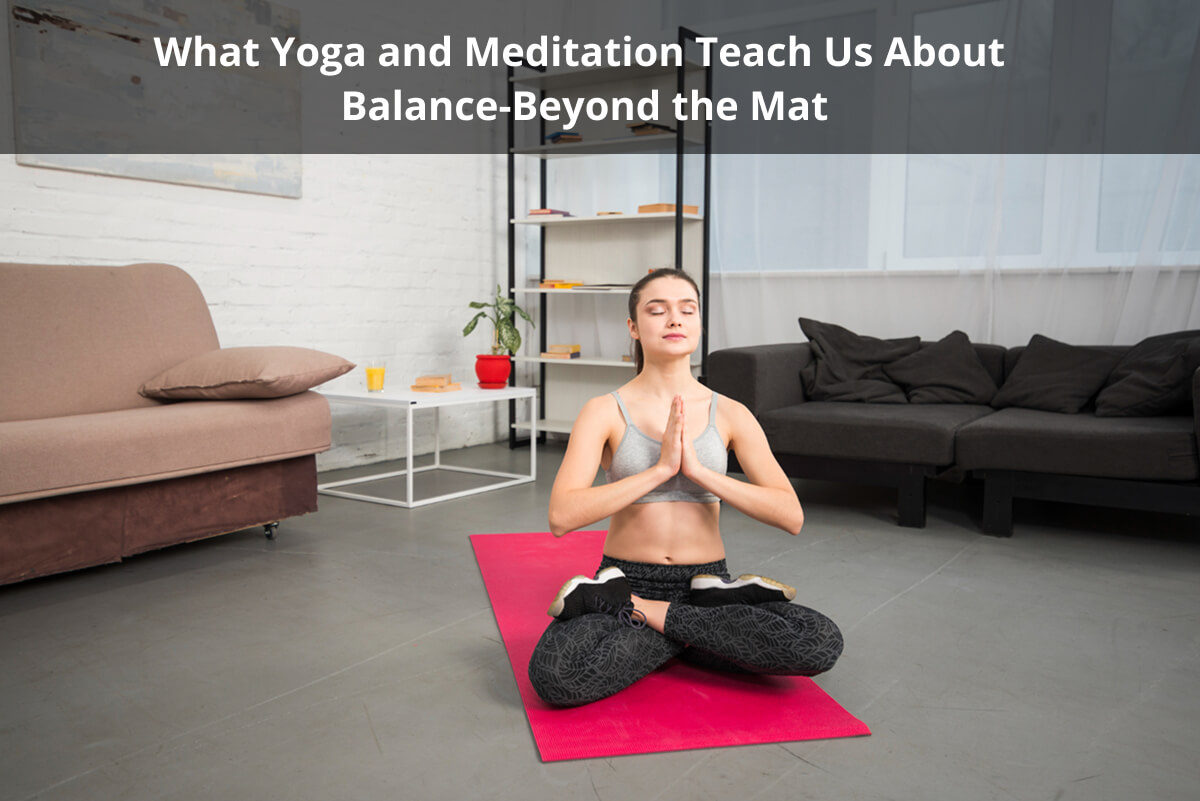
What Yoga and Meditation Teach Us About Balance—Beyond the Mat
Table of Contents
What Do We Really Mean by “Balance”?
Balance is often spoken about as if it were a schedule to perfect—an even split between work and rest, productivity and leisure, effort and ease. Yet lived experience rarely follows such symmetry. Real balance is not measured in hours or achieved through precise planning. It is felt.
At its core, balance refers to inner stability and adaptability. It is the ability to remain grounded while circumstances shift, demands fluctuate, and life refuses neat divisions. A balanced person is not someone whose days are evenly arranged, but someone who can move between intensity and rest without losing center.
Balance is not rigidity or passivity. Some seasons require sustained effort; others require recovery. Balance is the capacity to recognize what is needed in a given moment and respond without resistance or guilt. It allows strength to be directed where it matters while staying attentive to limits.
Rather than a fixed state, balance is a dynamic process—a continual returning to steadiness.
Why Balance Is Often Misunderstood
Balance is frequently mistaken for control. In cultures that value efficiency and optimization, balance becomes another system to manage—a routine to perfect.
One misunderstanding is equating balance with strict structure. While routines can help, overreliance creates fragility. When plans shift, balance appears to collapse.
Another misconception is believing balance means emotional neutrality—the absence of stress or discomfort. This is unrealistic. Life includes pressure and uncertainty. Balance does not eliminate challenge; it shapes how challenge is met.
True balance is adaptable, lived, and compassionate. It is practiced moment by moment, not permanently achieved.
Balance on the Mat vs Balance in Life
On the yoga mat, imbalance is visible. A posture wobbles. A stance collapses. You fall out of position and must begin again.
In life, imbalance is subtler. It appears as fatigue, irritability, overcommitment, or withdrawal.
Balance postures teach that stability does not arise from force. Gripping muscles and holding breath often create more instability. Instead, balance emerges through relaxed focus, steady breathing, and small adjustments.
Similarly, life balance is not created by rigid control. It comes from responsiveness—adapting to changing demands while staying present.
Falling out of a pose is feedback, not failure. Moments of imbalance in life are invitations to recalibrate.
Yoga as the Practice of Alignment
Yoga is not only flexibility or strength—it is alignment. This alignment integrates body, breath, and attention.
Physical alignment organizes the body efficiently. Breath provides rhythm and signals strain or ease. Attention ensures presence rather than mechanical repetition.
When these elements align, effort becomes coherent. Stability arises naturally rather than being forced.
This integration extends beyond the mat. Alignment in daily life means actions match values, effort respects limits, and awareness remains steady under pressure.
Meditation as the Practice of Inner Equilibrium
Meditation trains inner steadiness. Thoughts and emotions continue to arise, but awareness learns not to cling or resist.
Equilibrium develops through observation. Experiences are noticed as temporary movements rather than defining truths.
This steadiness does not mean indifference. It means clarity without entanglement.
Over time, meditation cultivates the space between stimulus and response—inner balance amid change.
Effort and Ease: The Core Yogic Principle
Sustainable balance lies between excessive effort and complete collapse.
- Too much effort: Forcing, straining, rigid control.
- Too much ease: Disengagement, drifting attention.
Balanced effort is alert yet relaxed. Breath flows naturally. The mind is attentive without tension.
This principle applies beyond practice—at work, in relationships, and in growth.
Listening to the Body’s Signals
The body often signals imbalance before the mind explains it.
- Fatigue: Invitation to rest or adjust pacing.
- Tension: Indicator of unprocessed stress or excess effort.
- Hunger and nourishment: Cues for responsive care.
Listening creates cooperation rather than correction. Balance becomes relational rather than rule-based.
Emotional Balance Through Awareness
Emotional balance does not mean suppressing feelings. It means relating to them consciously.
Through awareness, emotions are felt without immediate reaction or denial. Anger, sadness, joy—all arise and pass.
This middle path avoids both repression and overwhelm. Emotional life deepens without destabilizing identity.
Mental Balance in a Distracted World
Modern environments fragment attention. Mental balance is not escape from stimulation—it is discernment within it.
Single-pointed focus replaces scattered multitasking. Awareness returns gently to what matters.
Clarity increases not by adding more, but by reducing internal noise.
Balance in Action, Not Withdrawal
Balance does not require retreat. It is staying engaged while remaining centered.
Some days require intensity. Others require recovery. Balance lies in sensing honestly and adjusting.
Engagement becomes deliberate rather than compulsive.
How Balance Shapes Daily Decisions
- Conscious yes and no: Protecting energy and focus.
- Managing energy, not just time: Working with natural rhythms.
- Choosing response over reaction: Acting from clarity.
Small decisions reflect inner equilibrium.
Work, Rest, and Recovery in Harmony
True productivity depends on rhythm, not extremes.
Focused effort followed by intentional recovery prevents burnout. Rest becomes integral rather than optional.
Sustainable living replaces cycles of overexertion and collapse.
Why Balance Looks Different for Everyone
Balance is personal. It varies with life stage, responsibilities, capacity, and context.
No universal formula exists. Flexibility and self-awareness guide adaptation.
Equilibrium is responsive, not standardized.
Practicing Balance Without Perfection
Balance is dynamic, not flawless. Wobbling—on the mat or in life—is natural.
The practice lies in noticing and returning, not maintaining constant symmetry.
Self-compassion replaces self-criticism when imbalance appears.
FAQs About Balance in Yoga and Meditation
Is balance achieved or practiced?
Balance is practiced repeatedly. It is a living skill rather than a permanent state.
Can yoga improve life balance?
Yes. The integration of breath, body, and awareness cultivates adaptability and steadiness beyond fitness.
How does meditation support emotional balance?
By observing emotions without attachment, reducing reactivity and increasing resilience.
Is balance possible in a busy life?
Yes. Even brief moments of awareness support inner equilibrium amid demand.
What is the first step toward balance?
Awareness—of energy, breath, emotion, and response. From awareness, adjustment follows.
Key Takeaways
Balance is not a perfectly arranged life or a permanent calm state. It is an inner quality cultivated through awareness and adaptability.
Yoga and meditation train alignment and equilibrium—not as escape, but as deeper engagement with life.
True balance responds to change with steadiness, integrating effort and ease in each moment.
It is not something to achieve once and keep. It is something to practice, gently and repeatedly, every day.