
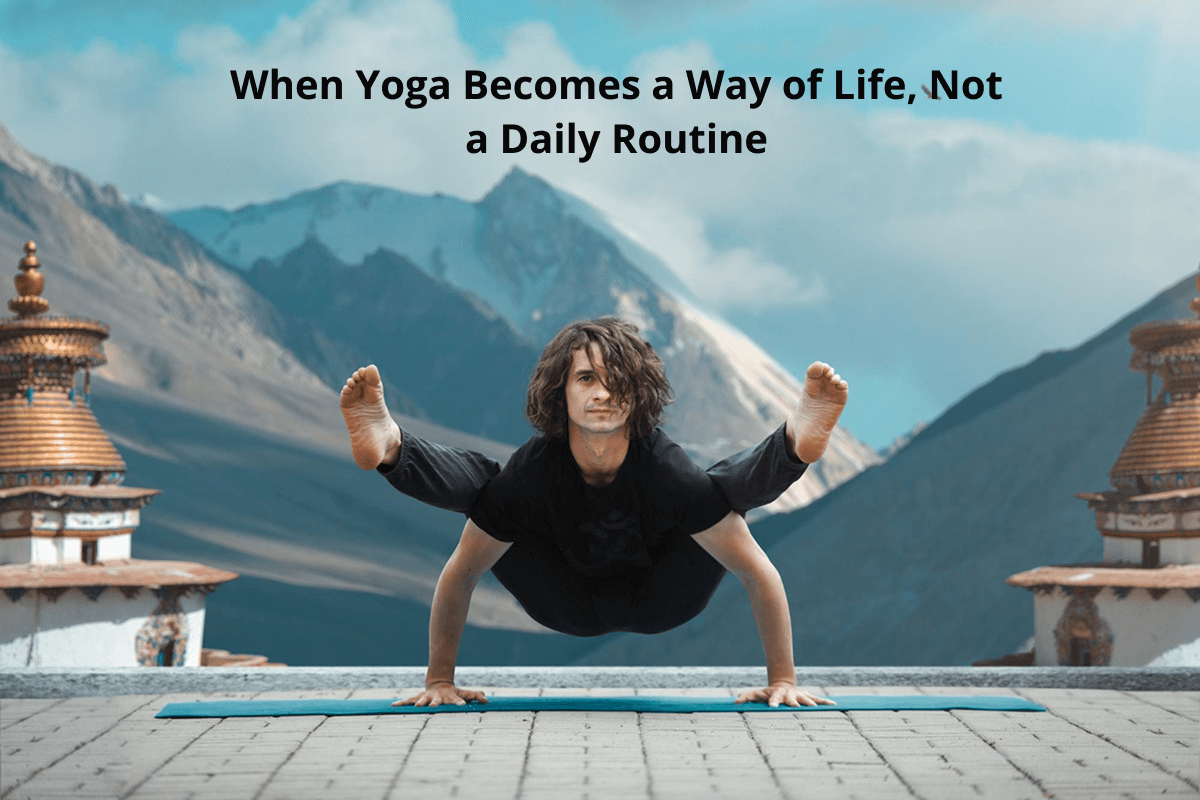
When Yoga Becomes a Way of Life, Not a Daily Routine
Table of Contents
Why Yoga Is Often Reduced to a Routine
In many modern contexts, yoga is treated primarily as a time-bound exercise or fitness activity. Structured classes, goal-oriented sequences, and the importance on physical postures frequently frame yoga as a routine task to improve flexibility or strength. While these benefits are valuable, this approach can disregard yoga’s deeper purpose of merging mind, body, and breath, reducing a holistic practice to a succession of flows performed on a schedule rather than a lasting path toward balance and self-knowledge.
The Difference Between Doing Yoga and Living Yoga
Many people view yoga as a set of physical exercises or structured practice sessions, but its deeper essence goes far beyond these actions. Doing yoga focuses on performing postures and techniques, often in a goal-driven, task-oriented manner. In contrast, living yoga means integrating its principles—mindfulness, self-awareness, balance, and conscious action—into every aspect of daily life.
It is less about the time spent on the mat and more about cultivating unity, awareness, and thoughtful engagement in thoughts, actions, and interactions, making yoga a holistic way of being rather than just a practice to complete.
How Routines Help—but Also Limit
Routines provide structure, consistency, and accountability in a yoga practice, helping individuals maintain balance and track progress. However, they can also create a sense of mechanical repetition, where movements are performed without awareness. Over time, this can lead to stagnation, missing the deeper mental, emotional, and spiritual benefits that yoga offers.
True transformation arises when practice combines routine with mindful awareness, not just adherence to a schedule.
Yoga as a Lens for Daily Living
Beyond the mat, yoga can serve as a framework for perceiving and engaging with life. Its principles—mindful awareness, balance, non-reactivity, and conscious choice—guide how we approach challenges, relationships, and routines.
By viewing daily actions through the lens of yoga, individuals cultivate clarity, equanimity, and intentional living, turning each moment into an opportunity for growth, self-understanding, and holistic well-being.
Awareness Beyond the Mat
Yoga’s benefits extend far beyond the time spent in class or on the mat. Awareness beyond the mat involves carrying mindfulness into ordinary moments—whether walking, eating, working, or interacting with others.
By observing thoughts, emotions, and bodily sensations throughout the day, individuals cultivate a continuous state of presence, making each action intentional and reducing reactive patterns that disrupt balance and well-being.
Breath as a Constant Companion
The breath is a living thread connecting body, mind, and emotions. Developing breath awareness outside formal practice allows individuals to anchor themselves in the present, regulate stress, and maintain calm during challenging situations.
Simple attention to inhalation and exhalation throughout daily life reinforces yoga’s principles, turning an automatic bodily function into a powerful tool for mental clarity, emotional regulation, and holistic balance.
Responding to Life, Not Reacting
Yoga teaches that true balance comes from conscious response rather than automatic reaction. By cultivating awareness, individuals create a pause between stimulus and action, allowing thoughtful choice instead of impulsive behavior.
This approach helps manage stress, improves decision-making, and fosters emotional stability, enabling people to navigate life’s challenges with clarity, composure, and intentionality.
Yoga in Work, Relationships, and Choices
The principles of yoga extend beyond physical postures into everyday actions and decisions. Applying yoga in work, relationships, and personal choices encourages:
- Mindful communication: Speaking and listening with awareness, empathy, and clarity.
- Ethical choices: Aligning actions with personal values and the well-being of others.
- Respecting limits and energy: Recognizing personal boundaries, avoiding overcommitment, and managing energy wisely.
By integrating these practices, yoga becomes a guide for intentional living, fostering balance, harmony, and conscious engagement in all aspects of life.
Discipline Without Rigidity
True yoga practice emphasizes consistent effort balanced with mindfulness, rather than strict, forceful routines. Discipline guided by sensitivity means listening to your body, mind, and circumstances—adapting practice when needed without abandoning commitment.
This approach nurtures sustainable growth, prevents burnout, and allows individuals to cultivate resilience, presence, and inner balance while maintaining a regular, purposeful practice.
Effort, Ease, and Natural Balance
Yoga teaches the importance of finding equilibrium between effort and ease. Rather than pushing to extremes or forcing results, practice is most effective when movements, breath, and focus are applied with gentle persistence and attentive awareness.
This balance nurtures growth, prevents strain, and allows both body and mind to develop harmoniously, fostering a state of natural alignment and well-being.
When Practice Stops Being Time-Bound
The deeper essence of yoga emerges when it transcends scheduled classes or mat sessions. At this stage, yoga is not confined to minutes or hours—it becomes a way of living, guiding thoughts, choices, and interactions throughout the day.
By integrating awareness, breath, and intentionality into every moment, life itself becomes the practice, creating continuous growth, presence, and holistic harmony.
Letting Go of the “Checklist” Mindset
Modern yoga often emphasizes streaks, pose mastery, and measurable goals, turning practice into a task to complete rather than a journey to experience. Letting go of the “checklist” mindset means shifting focus from external accomplishments to inner awareness and presence.
By prioritizing mindful engagement over performance metrics, yoga transforms from a series of targets into a continuous practice of self-understanding, balance, and holistic well-being.
How Living Yoga Shapes Inner Stability
Living yoga cultivates a steady, grounded presence that persists even amidst life’s uncertainties. By integrating mindfulness, breath awareness, and conscious action into daily routines, individuals develop resilience, emotional balance, and clarity of thought.
This inner stability allows one to navigate challenges with composure, make thoughtful decisions under pressure, and maintain harmony between mind, body, and environment.
Why This Shift Happens Gradually
The transition from “doing yoga” to living yoga in every aspect of life is gradual because it requires maturity, patience, and experiential understanding. True integration develops over time, as individuals learn to observe themselves, adapt to challenges, and internalize the principles of mindfulness, balance, and conscious action.
This reflective process ensures that yoga becomes a sustainable, transformative practice rather than a temporary routine.
Can Modern Life Support Living Yoga?
Yes—living yoga can be integrated into modern life without withdrawing from work, relationships, or responsibilities. It is about bringing awareness, presence, and intentionality into everyday activities rather than chasing idealized conditions.
By weaving mindful breathing, conscious choices, and emotional regulation into daily routines, individuals can experience the benefits of yoga while fully participating in contemporary life, achieving balance without rigidity.
FAQs About Yoga as a Way of Life
Q1. Is practicing yoga daily enough?
Daily practice is valuable, but true yoga extends beyond the mat, influencing thoughts, choices, and interactions throughout the day.
Q2. What does living yoga look like practically?
It involves mindful communication, conscious decision-making, stress regulation, and consistent attention to breath and presence in everyday life.
Q3. Can living yoga reduce stress more sustainably?
Yes. Integrating yoga principles into daily routines fosters resilience, emotional balance, and steady awareness, providing more lasting stress relief than isolated practice sessions.
Q4. Does living yoga require spiritual beliefs?
No. Living yoga is accessible to anyone, regardless of belief systems, because it focuses on awareness, intentional action, and well-being rather than ideology.
Q5. How can one begin moving from routine to way of life?
Start by carrying small elements of practice into ordinary activities—observing breath, emotions, and reactions—and gradually cultivating mindful presence in all aspects of life.
Key Takeaways
- Yoga begins as a routine but matures into a way of life.
- Awareness matters more than schedule.
- Living yoga is reflected in daily responses.
- True yoga is how we meet life, not just how we practice.
Create Meaningful Experiences Through Yoga and Meditation
Yoga and meditation can be more than daily routines—they can become immersive experiences that nurture reflection, presence, and inner exploration. Curated gatherings, retreats, and thoughtful events offer the space to step away from distractions, slow down, and connect deeply with oneself and the surrounding environment.
If you feel drawn to explore such experiences or wish to learn more, you can start a conversation or share your interest here: Enquiry Page.